
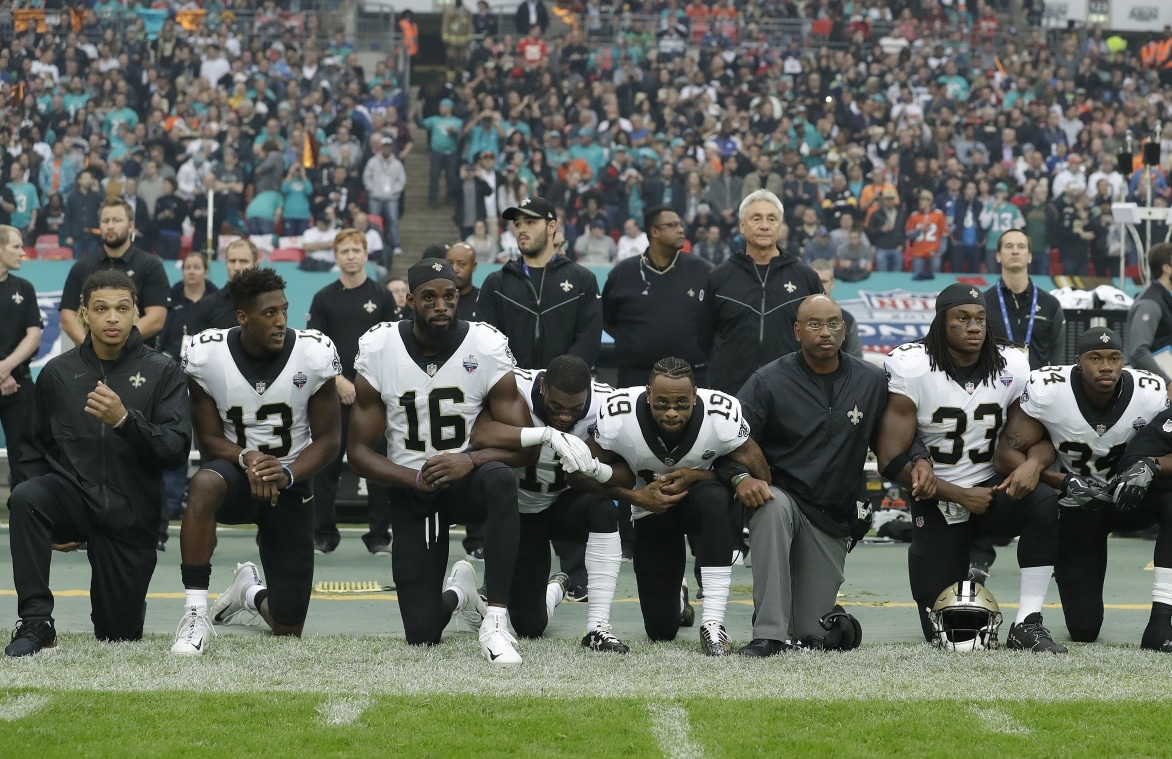
With the start of another high school football season the corner, a long-simmering dispute has heated up: Prayers at Games.
Kennedy v. Bremerton School District, The case of a high school Football Coach Praying on the Field after Games, Has Been in the Spotlight Since the Supreme Court’s 2022 RULING. But another football controversy first emerged in 2015, when two christian schools in Florida Made it to the state championships. The Games were run by the state’s high school Athletic Association, A Government Body.
Association Officials Barred The Teams from Conducting a Joint Prayer Over the LoudSpeaker at the Public Stadium Before Kickoff. Allowing a Prayer, they said, would Violate Federal and Constitutional Law. The first amendment’s establishment clause forbids the government from establishing an official religion, from giving preference to a Specific Religion and from GIVING FAVOR to Oor Disfavoring in general.
Officials at one of the schools, cambridge christian, filed suit, arguing that banning the proyer Violated its right to free speech and to the free exercise of health. Lower Courts ENTERED ORDERS in the Association’s favorite, but attorneys for the school petitioned the supreme court to hear the case.
As a Faculty Member Who Teaches and Researches Law Relating to Religion and Education, I Believe The Justices are likely to takely to take the case – and that its outs outs I say this trust the Supreme Court’s Recent Record in the first amendment cases has been more friendly to religious plaintiffs than ever in its history.
Government speech
Following Multiple rounds of Litigation, Cambridge Christian School v. Florida High School Athletic Association Reached a federal appearances court in September 2024. System.
The 11th Circuit Based Its Findings in Its View that PRAYER WOLLD BE A Form of “Government Speech”: That it would be personalized as reporting the state association, not just the Christian Schools. While the first amendment limits the government’s ability to regulate private speech, the government is free to regulate its speech.
Therefore, the court help that association officials did not go to the school’s right to free speech or free exercise of relief.
In Part, The 11th Circuit relied on a Similar Supreme Court case from 2000, which also examined prayer at a high school football game: Santa fe independent school district v. Doe.
In the Santa fee RULING, The Justices Invalidated A Board’s Policy of Allowing Prayer Over the Public-Eddress System “by a speaker represening the students, under the supervision of school faculty.” Such a policy has Violated the first amendment’s establishment clause, they determined, because “An objective santa fe high school students will get unquested will unquest With her school’s seal of approval. “
Endorsement test
According to Reasoning Known as the “Endersment Test,” A Message Violates The Establishment Clause if someone listening will be rested old Reasonally Assume that the government is endorsing Railigion. This test originated in Lynch v. Donnelly, A 1984 Dispute over a public christmas display in a rhode island park owned by a nonprofit.
Recently, however, the Supreme Court explicitly rejected the endorsement test – potentially strengthening cambridge christian’s case. The court rejected it and a similar set of criteria, called the “lemon test,” in another football-Related case, 2022’s Kennedy v. Bremerton school district.
The Majority Opinion Upheds The Right of a Football Coach in a Public High School, Joseph Kennedy, to Pray Silently on the Field at the End of Games. The justices explained that the instablishment clause does not “require the government to single out private Offshoot. “
The Lemon Test was the standard the supreme court had used since 1971 to evaluate interactions between the government and religion. Under Lemon v. Kurzman, There was three key Criteria for whether a law or government speech visited the evolution clause. To be permitted, a government action must have a secular purpose, and its main effect cannot eater advance or inhibit religion. Last, the action “Must Not Foster ‘an excess government entanglement with relief.”
In Bremerton, repudiating Lemon, The Justices Declared that Courts Should Instead Assess Establishment-Claims Based on “Historical Practices and Undrstandings.”
If the Supreme Court Agrees to Hear Cambridge Christian’s appeal, the justices will face two issues. The first is whather communal Prayer over a loudSpeaker before a state athlet association game is indeed government speed Private speech over the loudSpeaker. The second issue is wheether the endorsement factor of the government-speed doctrine revives the endorsement test.
Recent Record
If the Justices Agree to Hear Cambridge Christian, it must be Viewed Against The Court’s Recent History in Disputes Over Rligion. The Majority has often ben friendly Toward Religious Plaintifs in Cases Under Both Religion Clauses of the Constitution: Establishment and Free Exercise.
In recent years, for example, the justices allowed aid to fath-spoiled school students, found that a board could not prevent kennedy from proyrating silntly on the fiered after gams, and Granted Empolyes Time Off to worship.
Two important issues remain to bee seen: first, whicher the justices will continue expanding the boundaries of reliaved freedom; And Second, Whether Cambridge Christian will generate such a result.
Regardless of How the Supreme Court Rules – And Whtherra It does Rule – Florida has Alredy Adopted a Law Requiring Athletic Association to Allow Participating High Schools “to make brief open … Using the public address system at the event. “
Come Fall 2025, The Supreme Court will decide whether to hear the case. If So, Its Judgment May Clarify Whether Private Speech Using PABLIC PA SYSTEMS BECOMES GOVERNMENT SPEECH. BeCause the 11th Circuit relied on the endorsement test that Supreme Court Expressly repudied, it seems likely that the justices will hear the appeal and rule in combridge Christian’s Christian’s Christian ‘.
If the court does agree to revise Cambridge Christian, it may well expand the parameters of religious expression in public – not just at football games.
Charles J. Russo is Joseph Panzer Chair in Education and Research Professor of Law at the University of Dayton.
This article is republished from the conversation under a creative commons license. The conversation is an independent and nonprofit source of news, analysis and commentary from academic experts.
The free speech center newsletter offers a digest of first amendment and news-Media news every other week. Subscribe for free here: https://bit.ly/3kg9uij