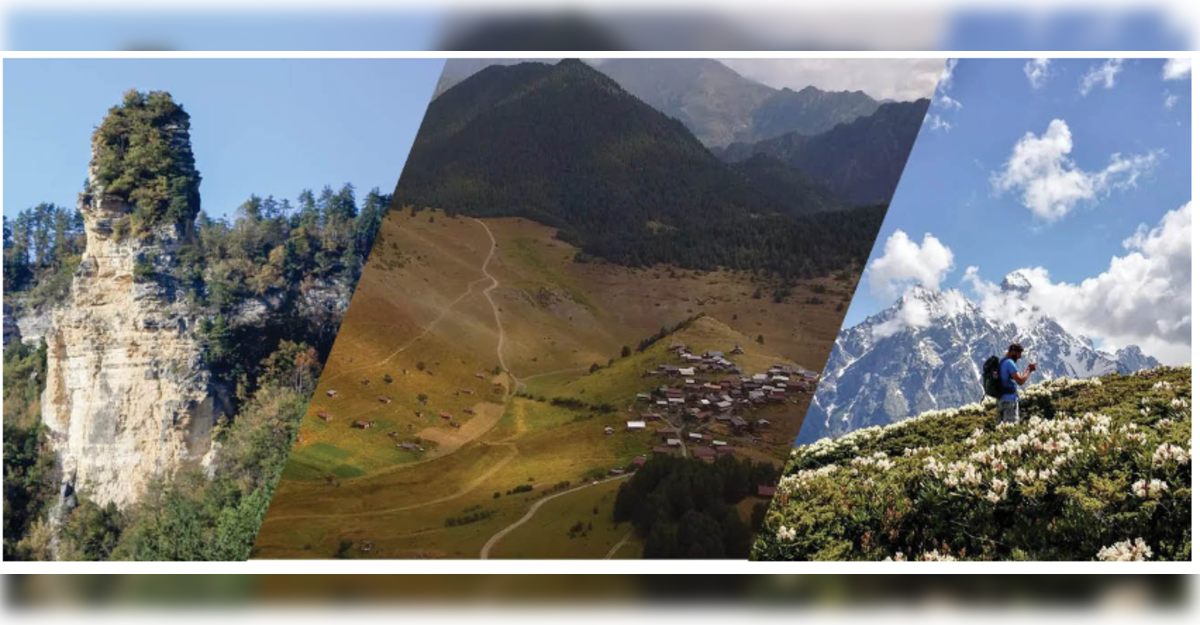
Positioned between Europe and Asia, Georgia is gaining visibility among international adventure travelers for its expanding hiking and trekking offerings across the Caucasus Mountains. With more than 250 hiking routes spread across varying terrains, the destination is appealing to both first-time trekkers and experienced mountaineers seeking nature-driven experiences.
Among the highlighted routes is the Lake Memuli trek from Zeda Memuli, a moderately challenging journey covering approximately 15 km over two to three days. Located at an altitude of nearly 2,750 metres, the trail moves through forested landscapes into alpine terrain and offers panoramic mountain views. The route is best explored between July and September, with local guides recommended for navigation and safety.
For seasoned hikers, the Omalo to Shatili trail remains one of the country’s most demanding long-distance routes. Stretching nearly 70 km across four to six days, the trek traverses remote settlements and mountainous terrain beneath the Greater Caucasus range, connecting three regions of the country. The trail passes through the Khevsureti region and is positioned as a high-endurance hiking experience suited for experienced trekkers.
In the Svaneti region, the Adishi to Iprari route continues to attract adventure enthusiasts seeking glacier views and high-altitude landscapes. Covering approximately 17 km over one to two days, the moderately difficult trail includes river crossings, steep ascents and elevated mountain passes. The route climbs towards Chkhutnieri Pass and offers views of prominent peaks including Tetnuldi and Shkhara. The recommended travel period extends from late June through September.
For travelers looking for shorter outdoor experiences, the Sairme Pillars trail provides an accessible alternative. The easy-to-moderate hike spans roughly 3 km and can be completed within three hours. The route passes through forest terrain leading to viewpoints overlooking volcanic rock formations, making it suitable for beginner hikers and family travelers.
As demand for experiential and outdoor tourism continues to grow globally, Georgia is positioning its mountain regions and hiking infrastructure to attract a wider segment of international adventure travelers.