
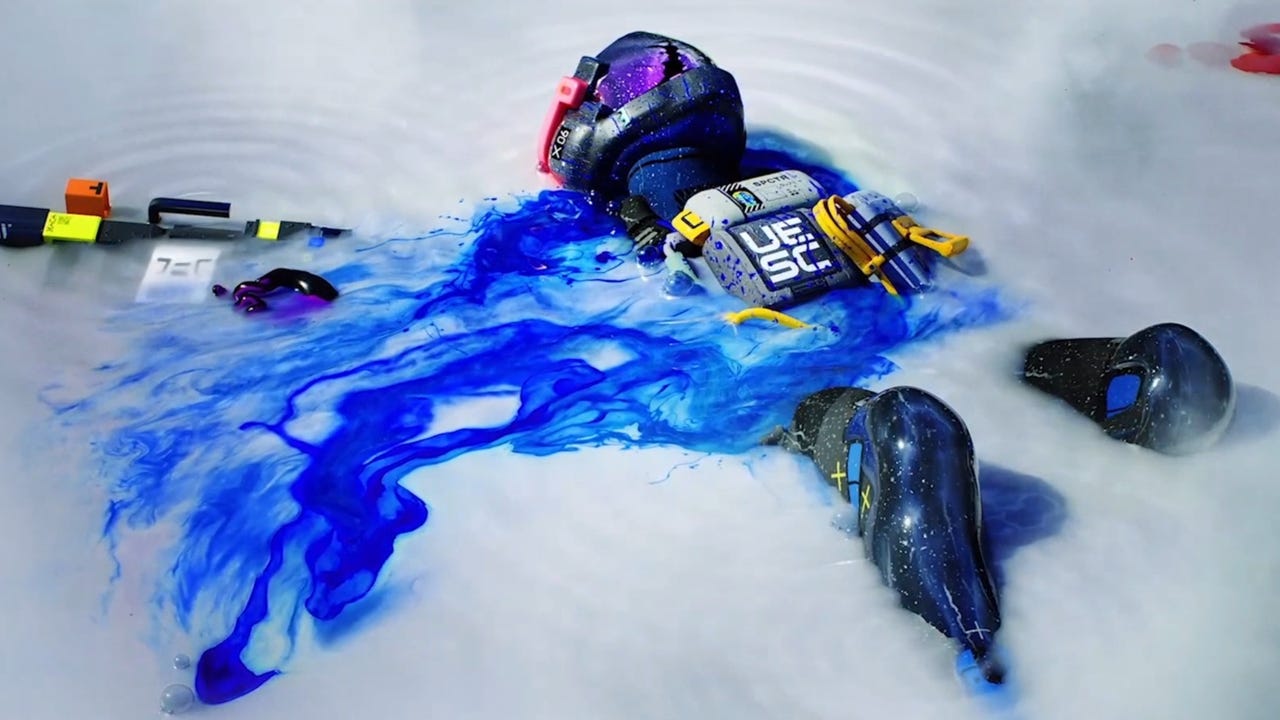
I left Marathon’s pre-release server slam convinced that I was dying too quickly, and that its short “time to kill” jarred with the game’s hero shooter identity. What’s the point in a smokescreen that turns you invisible, a deployable shield, or a smiling healing drone if your health bar vanishes before you can think about using them?
Now, 40 hours later, I’ve completely changed my mind. Marathon’s time to kill (TTK) is, I believe, perfectly tuned for tactical firefights between co-ordinated teams, and it’s all because of how shields work.
Let me first say that I prefer a shorter TTK in extraction shooters. Fragility is part of the fun. Knowing my gear could instantly vanish forever encourages caution, planning, stealth, and – when the moment comes – all-out aggression. I love spotting an enemy from afar, stalking them, waiting for the perfect moment, and obliterating them in a single pounce from the shadows.

Marathon’s puny health bars help you string together kills far easier than you can in, say, Arc Raiders. I don’t have the sharpest aim and so I can’t remember ever wiping an entire squad by myself in my 250 hours with Arc – in Marathon, I did it a few times in the short server slam by catching teams standing around with their inventories open, looting corpses.
I loved the unfamiliar feeling of bodies crumbling before me, but came away from that pre-release test period thinking that it felt arbitrary. Whoever spotted their opponent first – sometimes by skill, but often sometimes by chance – won the duel automatically.
I hadn’t anticipated how, in the full release version, stronger shields would change each fight. Guns get incrementally better as you collect mods that improve stability and lengthen your magazine, but attachments can’t directly boost damage against other players. Better shields, however, are a big upgrade. You can eat significantly more bullets with a blue-tier shield than a white one, and in an even shoot-out between players of similar skill, whoever has the better shield will almost always prevail.
That means the longer you play Marathon, and the more shields you stuff in your stash, the longer you can stay alive. The result is that it feels like Marathon smartly scales to match your knowledge of it. By the time you’ve mastered one or two of the character class shells you can, by equipping better shields, stay alive longer, giving you more time to harness their abilities. When playing as my favorite class, the Thief, a well-placed grappling hook can help me simultaneously escape a hail of gunfire and put me on powerful high ground, flipping a team fight on its head. If I’m carrying a blue shield solo, I feel like I have at least a chance of escaping an inevitable Assassin ambush, giving me the chance to heal and re-engage, whereas as a new player I would’ve died instantly. The combination of good gear and mastery of the shell keeps me alive.
I’ve seen complaints online that unless you have a high-tier shield you’re toast. But to me that’s just good extraction shooter design. Encounters shouldn’t feel fairper se – they should instead balance the risk and reward of losing valuable gear by favoring players who bring their best loot into a match. In Marathon, if you load in with a valuable blue shield you’re rightly rewarded with a longer life. On the other side of the fight, meeting a high-level player is like a mini boss fight. If you see purple sparks fly from their shield you know you’re likely to die, but you also know that winning will shower you in loot, so you push harder.
This system discourages the use of free kits, the basic-level equipment that you don’t need to scavenge for. I use them frequently to complete contracts but, when you think about it, the fewer free kits in any given round the better for everyone. Looting a body and finding starter weapons and depleted patch kits is anticlimactic: if you’re going to the trouble of taking on a fight you want something shiny at the end of it.
When two squads of fully-kitted players clash, Marathon comes alive. Abilities crackle in every direction as players ping their opponents and reposition. Guns still feel lethal but there’s a layer of tactics too, and careful cooldown management is nearly as important as perfect aim. You can rarely delete a player in a single burst, but cracking their shield takes them out of the fight for a few seconds as they retreat and heal, allowing your squad to push the advantage.
These fights are intoxicating and, beyond the simple joy of seeing my stash value tick up, they are the reason I am still playing Marathon. I load into each round with an objective to tick off but really what I’m hoping for is to meet a fully-loaded squad – even if it means yet another trip back to the main menu.
If you’re just starting out on Tau Ceti IV, our Marathon Beginner’s Guide and Things to Do First should help you navigate your first few runs. Beyond that, we’ve got interactive maps and tips for Perimeter, Dire Marsh, and Outpost, plus expert early game builds for Destroyer, Recon, and Triage runner shells.